News
March 25, 2026
Beneteau Quietly Pulls the Plug on Charter (And Nobody is Talking About It)
On the surface, Groupe Beneteau’s FY2025 results press release reads like standard corporate damage control: market headwinds, inventory normalization, order book recovery. The kind of language designed to reassure shareholders and send journalists home early. However the announcement also made reference to a decision dating back to the second half of 2025: Groupe Beneteau was withdrawing from its charter activity. No doubt this is the kind of news that would not have gone unnoticed, yet the entire yacht charter market seems to be caught by surprise.
Beneteau is out. Not restructuring, not pivoting: out of the game all-together. The group announced its full withdrawal from its charter and boat club operator activities, writing down €29 million in the process. And the two companies at the centre of that exit — Dream Yacht Charter and Navigare Yachting — happen to be the first and fourth largest yacht charter operators on the planet. What does this exit mean, and what does the future hold?
What the Headlines Aren’t Saying
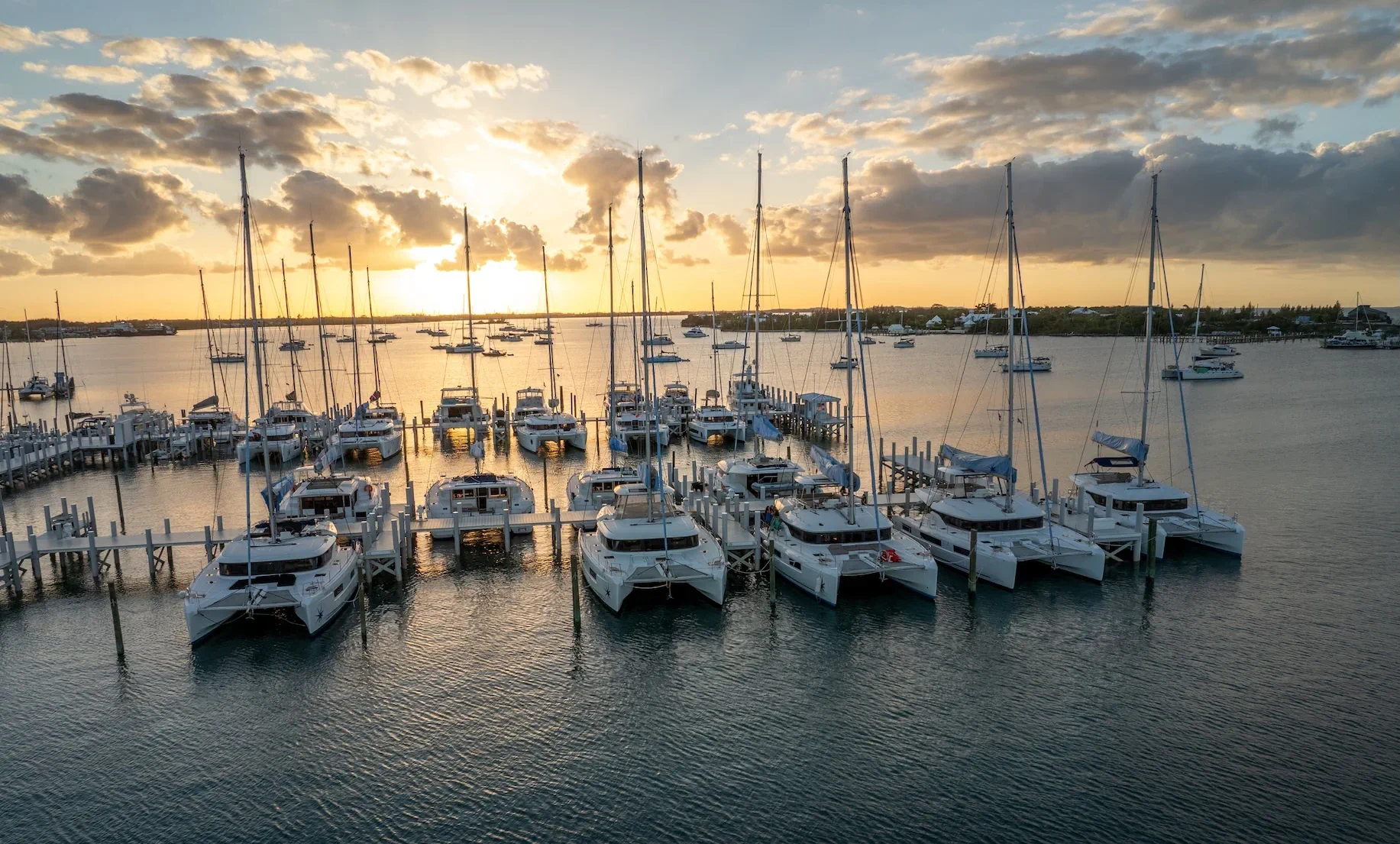
Groupe Beneteau holds a 41% stake in Blue Sea Holding, the joint venture with Czech investment group PPF that controls both Dream Yacht Charter and Navigare Yachting. Together, they operate a fleet of over 1,000 sailboats and catamarans across 50+ destinations worldwide.
And Groupe Beneteau is walking away from 41% of that. A €29 million impairment. Combined pre-pandemic revenues of the two companies: over €200 million annually.By the Numbers
41%: Groupe Beneteau’s stake in Blue Sea Holding (Dream Yacht + Navigare)
€29MM: Written down in the exit, on top of €25MM in losses in 2024
€200MM+: Combined pre-COVID revenues of the two charter companies
How We Got Here
In 2021, Groupe Beneteau entered the charter world with fanfare. The vision was compelling: marry the world's leading boatbuilder with the world's largest charter network, creating a vertically integrated behemoth that could control everything from the factory floor to the bareboat booking (At the time, the joint venture also acquired controlling interest in the online charter broker SamBoat). Groupe Beneteau invested roughly €40 million alongside PPF Group, which took the majority 59% stake in Blue Sea Holding.
Separately, Groupe Beneteau also took a stake in Your Boat Club in North America — their bet on the boat-club model as a gateway to first-time boaters. That too is gone.
The FY2025 release from Groupe Beneteau reads: “The withdrawal from charter and boat club activities marks a turning point. These segments, in which we held minority stakes, weighed on our results."
What Groupe Beneteau doesn't dwell on (and no news outlets seem to have noted) is that "minority stakes" isn’t insignificant. A 41% share of two of the world's largest charter operators is not a passive footnote. It was a strategic bet, marketed as the future of their Boating Solutions division. Now it's a line item in the write-downs column.
What Drove the Decision?
The group cites "financing difficulties for charter companies”, specifically referencing Greece, where the end of subsidy programs hit operators hard. Charter fleets tend to be capital-intensive by nature, running hundreds of boats, managing depreciation on assets that are simultaneously your product and your inventory (unless they are owned by “investor” yacht owners, we will come back to that), and you're acutely exposed to seasonality, fuel costs, geopolitics, and consumer confidence all at once.
For a listed manufacturer whose shareholders primarily care about margins on units sold, carrying the operational risk of running charter fleets — especially through COVID, through a macroeconomic downturn, and through a broader softening of the sailing market — became increasingly hard to justify. The charter segment dragged on the Groupe’s results for two consecutive years: €25 million in losses from associates in 2024, followed by the full €29 million impairment in 2025.Their new direction is telling: rather than operating charter companies, Groupe Beneteau wants to return to only supplying them with the new boats that have historically filled a sizable share of the boat builder’s order book (not only monohulls like Jeanneau and Beneteau, but also Lagoon and Excess catamarans) — a simple strategy already replicated by PPF in 2021 when the investment group unilaterally acquired the South-African shipyard Robertson & Caine, leading manufacturer of sailing and power catamarans under the Leopard brand… and of the largest fleet of catamarans available in charter through the Moorings/Sunsail fleet, part of the Travelopia Group.
So Who Picks up 41% Stake in the World’s Largest Charter Fleet?
This is the question that's conspicuously absent from the press release. PPF Group — Beneteau’s partner and the majority shareholder in Blue Sea Holding — will presumably need to find a new co-investor, buy out Beneterau’s stake themselves, or restructure entirely. PPF is a serious, diversified investment group with deep pockets, but they are not a marine industry operator. They need capable partners.
The pool of credible buyers for a 41% stake in a business of this complexity and scale is not large. Is there a private equity group with genuine maritime operational expertise looking to take on such a challenge? A competing charter group seeking consolidation? A sovereign wealth fund betting on experiential tourism? The answer matters enormously, not just for Dream Yacht Charter and Navigare, but for the thousands of boat owners who have their vessels placed in these fleets, and the tens of thousands of sailors who enjoy a charter vacation each year.
Outstanding Questions
Of course the question of who will acquire Groupe Beneteau’s 41% stake is the critical one.
Is this outcome the result of a charter industry problem, or a management problem? The manufacturer framed their withdrawal from the charter market as cleaning up a loss-making minority stake. But the losses may suggest deeper structural issues: oversupply of charter yachts, charter pricing not keeping pace with the rise in new yacht pricing, and a customer base that hasn't fully rebounded post-COVID.
The next interesting question is that of fleet renewal. With the strategic relationship severed, will Dream Yacht and Navigare continue to source their new vessels from Groupe Beneteau, or pivot to competing builders? This question has likely already been weighted by Groupe Beneteau. And if the fleet operators’ longevity is at stake, the impact will be felt throughout the yachting industry, with manufacturers like Fountaine Pajot and Bali likely to suffer similar consequences on their order book.
What does this mean for boat owners in charter placement? Fleet operators under financial or ownership pressure make different decisions about refit cycles, maintenance standards, and owner revenue splits. Owners with boats in any charter fleets should pay close attention: the ownership transition is worth watching closely and will have ripple effects throughout the industry.
Is the charter industry on the verge of consolidation — or contraction? One narrative: this is the painful pruning that precedes a healthier, leaner industry. Another: the largest player in the manufacturing sector just concluded that owning charter operations isn't viable. That's a signal worth taking seriously.
Our Read: Opportunities for the Well-Positioned, Uncertainty for the Rest
We don't believe this news signals the death of sailing charter. Demand for experiential, independent travel on water is structurally sound. It's demographic, it's aspirational, and it's global. But the global model of building enormous, manufacturer-backed fleets and managing them at scale has clearly hit its limits, at least for a publicly listed company with quarterly earnings pressure.
What tends to follow moments like this is a rebalancing. Smaller, professionally managed charter operations (often called boutique operators) with strong regional expertise and lower overhead tend to perform well in the gaps left by retreating giants. Owner-operated fleets, where the asset owner and the charter manager have genuine skin in the game, become relatively more attractive. And brokerages that understand both the ownership side and the operational side can help clients navigate this transition gracefully.
We are watching this developing situation closely. If you have vessels currently under charter management, or if you are considering charter placement for a new acquisition, we'd encourage you to be both cautious and thorough with your due diligence before making any decisions.
Our role as yacht brokers and specialists of the charter market goes beyond the transaction. It means reading between the lines of earnings reports, watching for changes and identifying trends or concerns in the fleets your assets are placed with. You can count on Current Yachts to give you honest counsel when the industry shifts.
Sources: Groupe Beneteau FY2025 Annual Results (March 2026); PPF Group / Blue Sea Holding company page. This post reflects our independent analysis and does not constitute financial or legal advice.